In-house heat treatment that finishes the forging
Forging shapes the metal; heat treatment gives it its properties. MTS runs normalising, annealing, stress relief, and quench & temper on our own furnaces, so your part goes from press to controlled thermal cycle without leaving the plant.
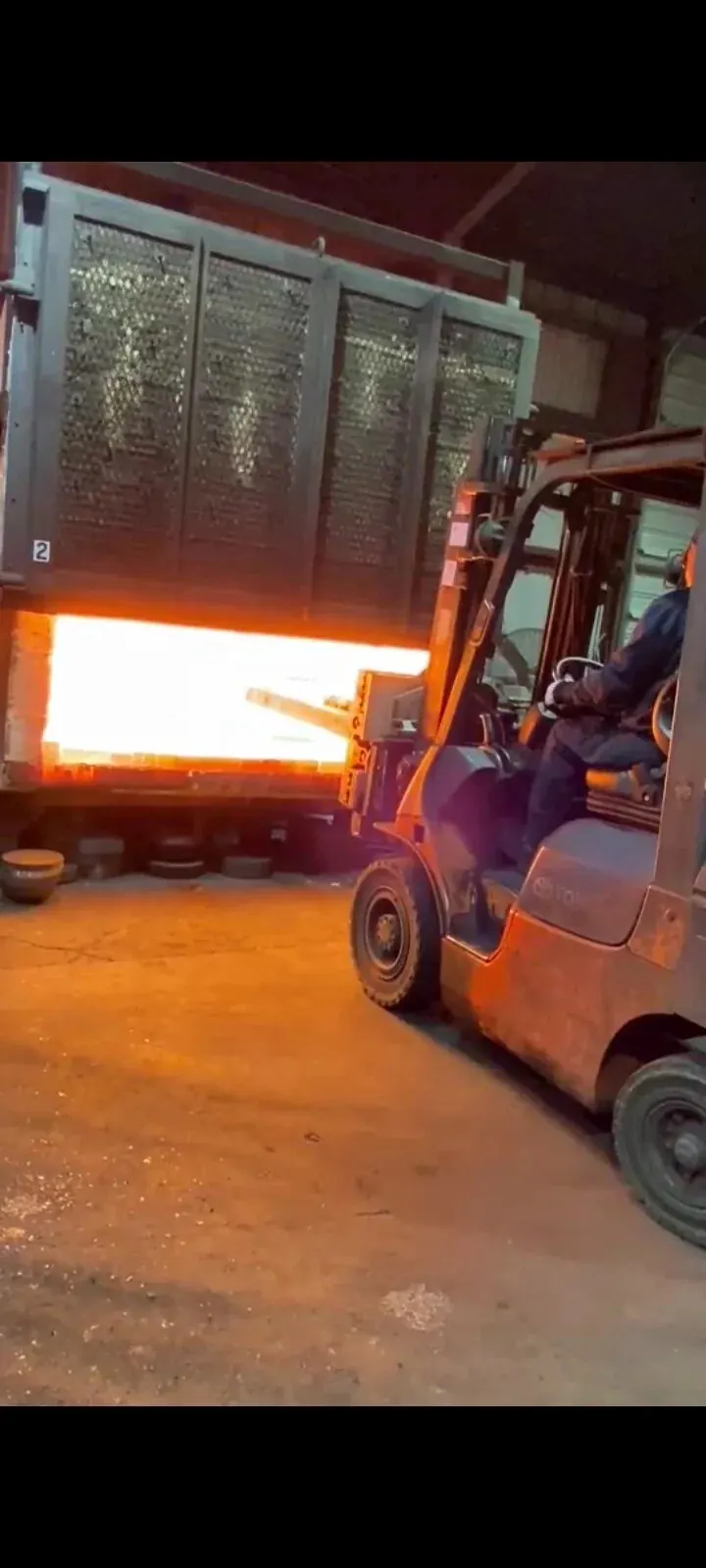
Thermal processing, controlled under one roof
A forging carries stresses and a coarse grain structure straight off the press. Left untreated, those conditions cut into strength, invite cracking during machining, and make the part behave unpredictably in service. Heat treatment resets the microstructure and locks in the mechanical properties your specification calls out.
Because MTS heat treats in-house, we control the whole thermal history of your part — no shipping to an outside processor, no queue at a third party, no lost traceability. It all stays inside our ISO 9001:2015 quality system, from forging through the final cycle.
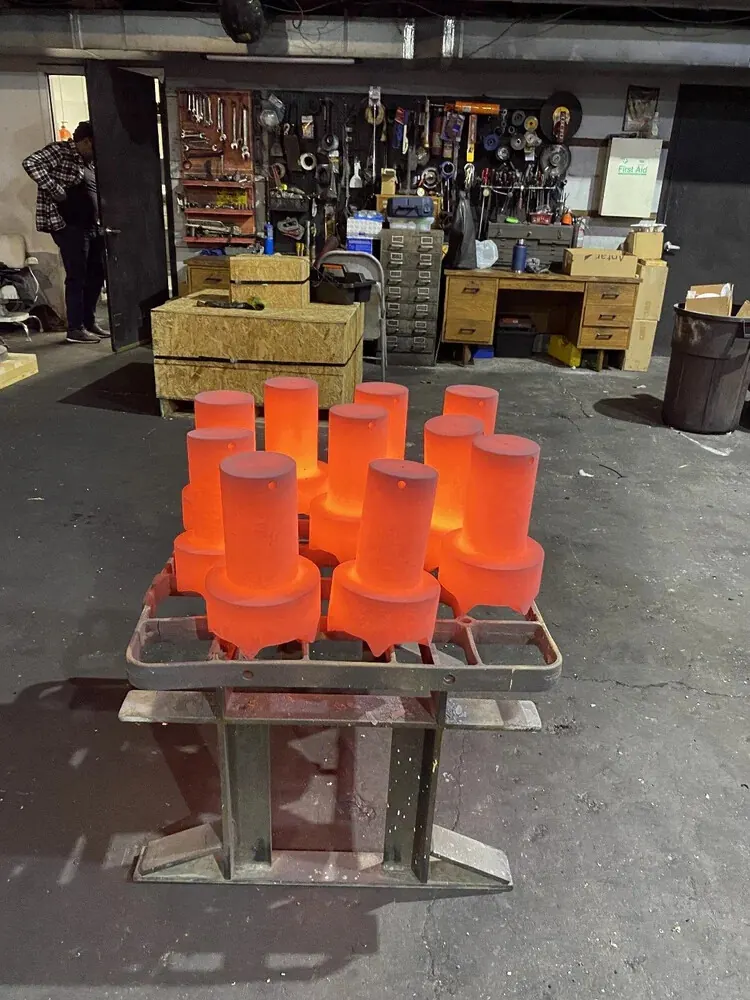
Processes we run
The right cycle depends on your material and your end use. We match the treatment to what the part has to do.
Normalising
Heating above the transformation range and air cooling to refine grain, even out the structure, and restore consistent properties after forging.
Annealing
Softening the metal for improved machinability and formability while relieving internal stresses and refining structure.
Stress Relief
A sub-critical cycle that draws out residual stresses from forging and machining so parts stay dimensionally stable.
Quench & Temper
Hardening followed by tempering to develop high strength and toughness where the application demands it.
Controlled cycles
Time and temperature managed to your material spec for repeatable, documented results on every load.
Full traceability
Every treatment stays inside our ISO 9001:2015 system, tied to the forging it came from.
Normalising: the workhorse cycle after forging
Most carbon and alloy steel forgings get normalised. Heating the part above its critical temperature and cooling it in still air recrystallizes the coarse, uneven grain left by forging into a fine, uniform structure — the foundation for consistent strength and predictable machining.
- Refines and homogenizes the grain structure
- Restores uniform mechanical properties across the part
- Improves machinability for the rough-machining stage
- Prepares the forging for any further hardening cycle
What heat treatment buys you
The right thermal cycle turns a raw forging into a component you can rely on.
Mechanical properties
Dial in strength, hardness, and toughness to hit the values your drawing and material standard require.
Grain refinement
Break down the coarse as-forged structure into a fine, uniform grain for better fatigue life and consistency.
Machinability
Soften and stabilize the metal so it cuts cleanly and holds dimension through rough and finish machining.
Need forgings treated to spec?
Send us your material grade and the properties you're chasing. We'll forge, heat treat, and rough machine it in one place.